www.buszone.co.uk

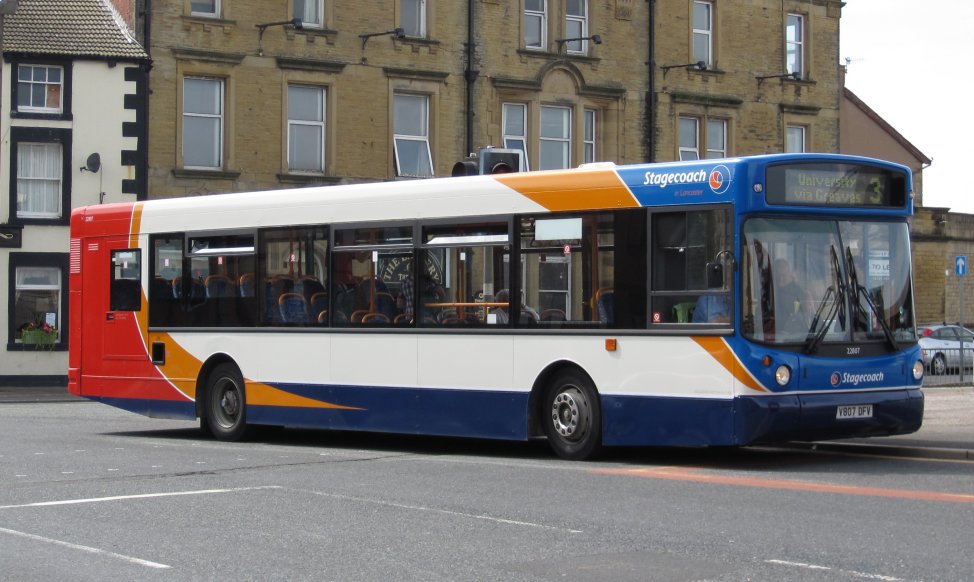
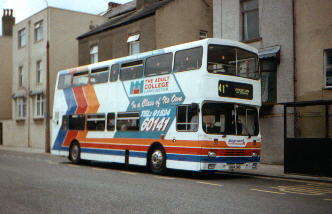
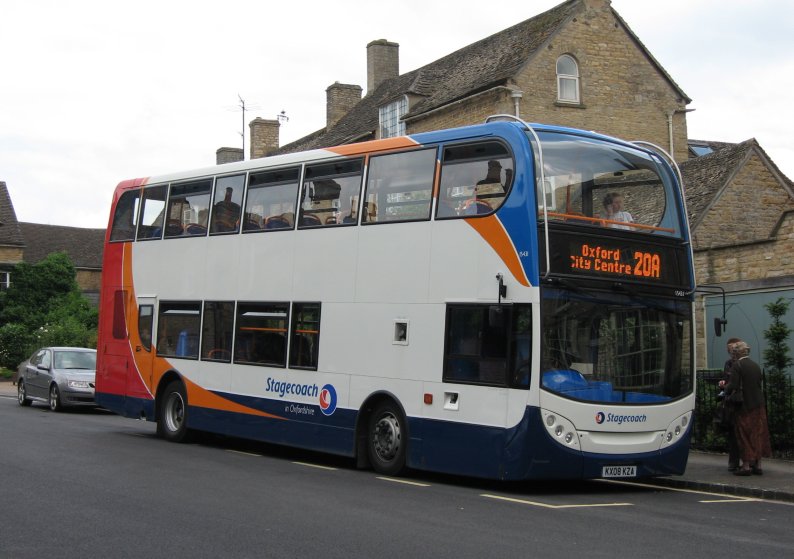
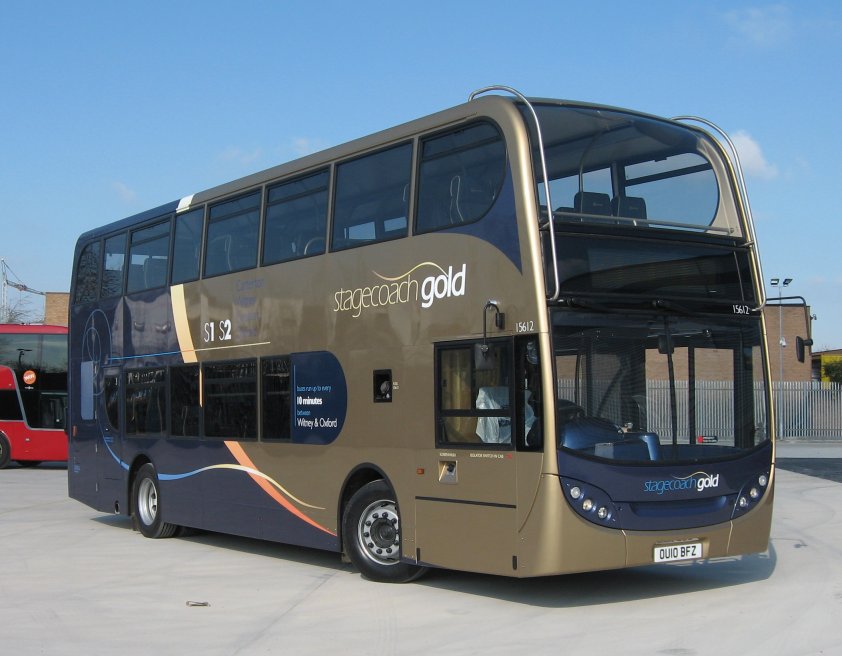
Stagecoach has a corporate livery which is applied to all vehicles, along with a premium Stagecoach Gold livery and budget Magic Bus livery in certain areas. The current 'swoops' corporate livery replaced the original 'stripes' livery that was applied to all vehicles when the company was founded in the 1980s. Each division of the company has a different area name, such as Stagecoach in Oxfordshire or Stagecoach in Cumbria. Many of the company's operating divisions were originally separate companies or companies which were taken over from the National Bus Company when it was privatised. Stagecoach also operates a few express services between the areas that they operate in, operates Megabus.com and has a 35% stake in Scottish Citylink. It owns approximately 8,100 vehicles in the UK.

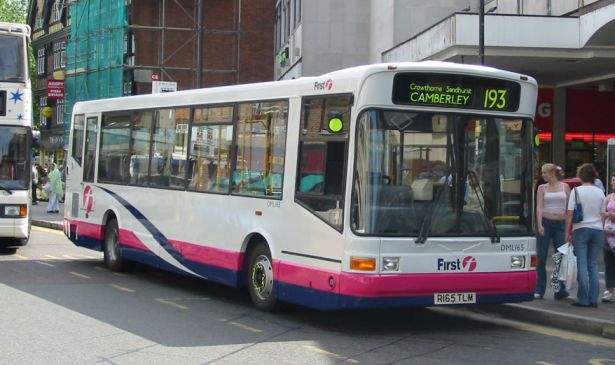
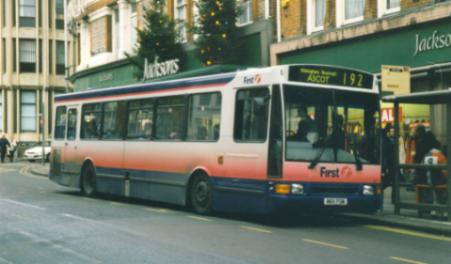
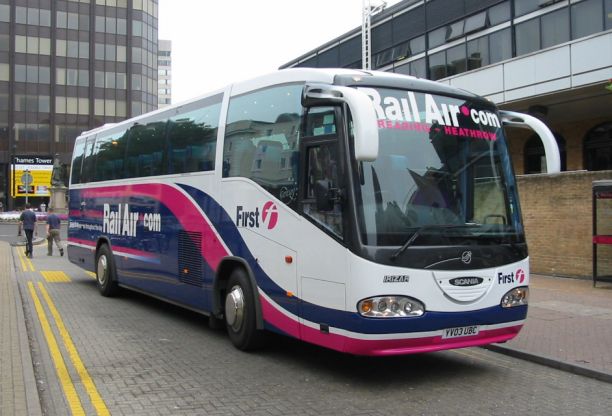
First have a corporate livery that is applied to all buses, with a modified version for coaches. Previously they adopted two liveries to buses, one for new low-floor buses and one for all of the others. Some new step entrance double deckers also wore the low floor livery. To qualify the vehicle had be fitted with the standard First interior and meet the latest European specifications. The various divisions of the company previously had names such as First Badgerline and First Beeline which were based on the names of First's predecessors, but now they are named geographically like First in Berkshire and the Thames Valley or First in Greater Manchester, whilst vehicles simply have First fleetnames. Local fleet names started to make a comeback during 2012 with a new livery using lilac instead of purple. First also operate Greyhound coach services and have approximately 7,500 vehicles in the UK having come from a high of 9,800.
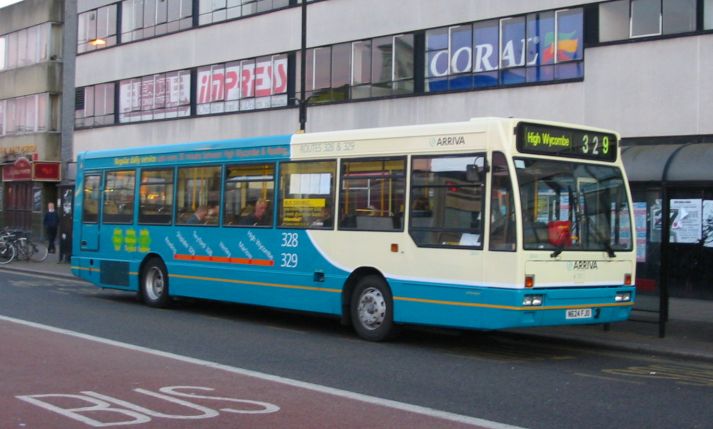
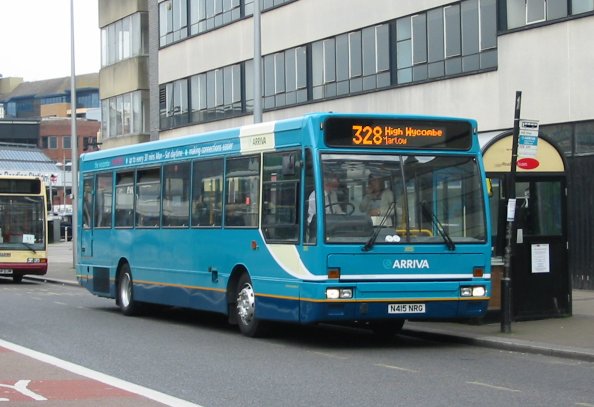
Arriva (pronounced the Spanish sounding way - not rhyming with driver) apply a standard livery to all of their vehicles, but with a modified second 'interurban' version for certain routes. Their buses do not carry regional fleet names but instead have regional descriptors such as 'Arriva serving London' and company names which are similarly geographical. All traces of their predecessors have been removed. Arriva have approximately 6,300 vehicles in the UK having come from a high of 7,100.

Go-Ahead is a smaller-large operator, mainly operating in the North East and South East of England. Buses in the North East are the only ones to use Go-Ahead style fleetnames with "Go-" at the beginning, with buses in other regions using their own historic liveries and company names. They purchased Wilts & Dorset on 11th August 2003, Plymouth Citybus on 1st December 2009, Thamesdown Transport on 3rd February 2017 and East Yorkshire Motor Services on 18th June 2018, bringing the total number of vehicles to approx 4,000.
The current version of Wilts & Dorset was formed on 1st April 1983 with close links to a previous Wilts & Dorset which started operations in 1915. Wilts & Dorset also use the trading names Damory Coaches, Tourist Coaches and Lever's Coaches on a few of their vehicles. The Birmingham Coach Company (Diamond Bus) was purchased in 2005 to become Go West Midlands (Diamond), but was sold in March 2008.
The East Yorkshire Motor Services Group was formed in February 1987 after privatisation of the state owned company by the same name which was formed in 1926. During private ownership Manchester operator Finglands was acquired in 1992 and sold to First on 1st August 2013.

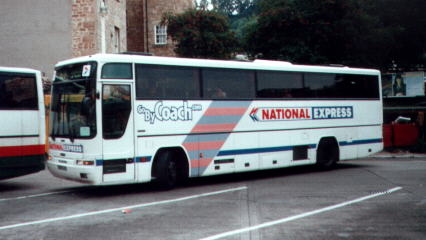
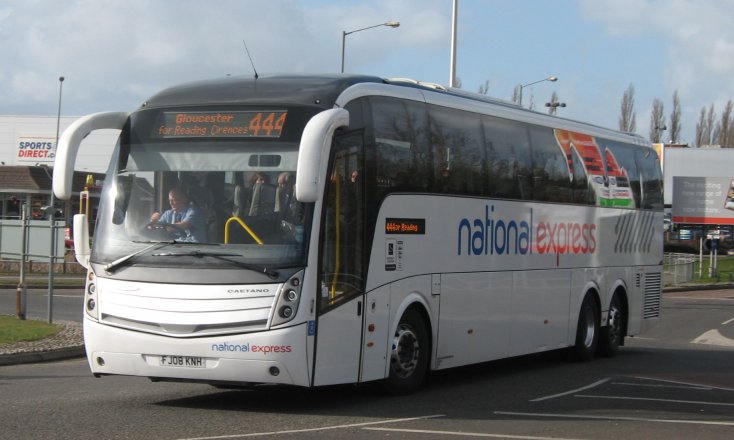
National Express operate a coaching network across the UK, as well a small number of bus operations. It has a corporate livery of red and blue lettering based on plain white, and is currently on its third version. The original livery illustrated (left) above had its origins from National Bus Company days, using the double N logo, and over time extended to five different variants for different types of services. This was replaced as part of the company's 30th anniversary with a single livery with a white arrow linking red and blue circles. Then in February 2008 the current livery was launched, illustrated (right) above, featuring grey 'connectors' along the side of the vehicles. It has two main bus companies - Travel West Midlands and Travel Dundee and in total has approximately 1,900 vehicles in the UK. From time to time the company has had operations in the London area named Travel London, but not at present.

RATP Dev was established in 2002 as the RATP Group focusing on developing and managing the operation and maintenance activities for transport networks in France. It
entered the UK market when it acquired certain former Transdev operations upon their merger with Veolia in March 2011. In the UK RATP Dev own Bath Bus Company, London United and Yellow Buses of Bournemouth, amounting to approximately 1,000 vehicles.
Transdev is the world's largest transportation company and was formed out of the merger of Transdev and Veolia on 7th March 2011.
Transdev has approximately 1035 vehicles in the UK running the former Blazefield Group (formed in 1991 and includes Burnley & Pendle, Harrogate & District, Keighley & District, Lancashire United, and Yorkshire Coastliner) (480 buses), London Sovereign (130 buses), and a 17% stake in council owned Nottingham City Transport (325 buses). They acquired Rossendale Transport (100 buses) on 12 January 2018.
Wellglade
This group started with the purchase of Trent Buses from the National Bus Company on 31st December 1986. In 1989 Barton was added, and the group also owns Kinchbus and Notts & Derby. The Trent and Barton brands were merged in October 2002 to become TrentBarton. TM Travel were purchased on 5th January 2010. The company has a total of about 470 vehicles.
Status Bus and Coach
This company was formed in June 1999, and is made up of loosely related independent bus and coach operators. It has around 400 vehicles.
Municipals
There are also 9 remaining local authority owned bus companies in the UK, some with sizeable fleets. The companies are: Blackpool Transport (175+75 trams), Cardiff Bus (240), Halton Borough Transport (61), Ipswich Buses (71), Lothian (600), Newport Transport (90), Nottingham City Transport (325 + 15 trams), Reading Transport (155), and Warrington Borough Transport (125). The main operator in Northern Ireland Translink is also in public ownership with 1,600 buses.
Related sites to visit: