Optare
www.buszone.co.uk
Optare was Reading Transport's main supplier of vehicles during the 1990s, and this page aims to give a historical outline of all of the vehicle types that Optare have produced since they were set up in February 1985. A number of pictures on this page have been taken from their website or company material.
Optare started life in 1985 with the purchase of the formerly Leyland-owned Charles H Roe coachworks at Crossgates, Leeds by a group of determined employees. It was at a time when bus sales in the UK were low due a large amount of uncertainty regarding the forthcoming deregulation of the bus industry. The company started developing new stylish complete buses, initially in co-operation with chassis manufactures before moving to develop it's own under-frames and consequently integral buses. They built on the skills inherited from the Roe company, which has a history dating from 1923. Initially they only produced minibuses, but then moved on to larger things with the purchase of some vehicle designs from MCW.
The company the United Bus Group in 1990, comprising DAF Bus, Bova, Den Oudsten and DAB, which consequently collapsed in 1993 and led to a second buyout by the employees. In 1997 they acquired Autobus, a specialist builder of luxury midicoach bodies based on Mercedes Benz chassis. In 1998 they opened a second factory in Rotherham, and along the way began importing small coaches from Spanish bodybuilder Ferqui but badged as Optare products. Then in early 2000 Optare was acquired by NABI - North American Bus Industries, providing the company expansion opportunities in North America and continental Europe. However following restructuring at NABI during 2005, Optare was again bought back by its management from 1st August 2005.

In March 2008 a company called Jamesstan Investments purchased Optare from its management, Jamesstan Investments sole shareholder Roy Stanley also being the chairman and founder of Darwen which was formed in August 2007 to take over the failed East Lancashire Coachbuilders business. This led to a reverse takeover of Optare by Darwen in July 2008, with the new company Optare PLC being floated London Stock Exchange Alternative Investment Market.
Ashok Leyland acquired a 26% share in the company on 29th July 2009 as part of a long term strategic partnership allowing Optare to improve its competitiveness in the UK and its export markets through access to Ashok Leyland’s lower-cost supply chain, cooperation in new product development and improved management of working capital. Ashok Leyland shares a common history with Optare having originally been part of Leyland. A refinancing package was agreed on 6th January 2012 which saw Ashok take a controlling shareholding of 75.1%, allowing Optare to become fully integrated in Ashok’s ambitious global bus strategy.
A dedicated new factory at Sherburn was opened from 1st August 2011, replacing the original factory 11 miles away at Crossgates in Leeds. The former East Lancs Blackburn facility remains open in the short term for refurbishment work and retrofitting green drivelines, but is intended to move to an unidentified smaller site in Blackburn in the longer term.
The Start
The first bodies Optare built were 14 Dennis Domino midibuses, and then 15 Leyland Cub bodies which had front ends with shallow radiators. Their only mark of resemblance is that they all had flat windscreens.
Leyland Olympians
Optare bodied some Leyland Olympians on contract to ECW in the late 1980s. The body was to standard ECW design.
City Pacer
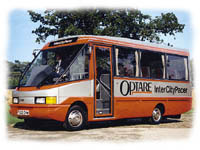
This was Optare's first model, built on a Volkswagen LT55 chassis, specifically imported for them and modified for their use. It was introduced in 1986, and came at a time when the industry started requiring 25 seat minibuses. It had very distinctive styling designed by Leeds art students. It was so unlike the bodies fitted to similar sized van derived minibuses that it won the Bus of the Year prize. The coach version was known as the Inter-City Pacer.
Star Rider
This followed the City Pacer, and was based on Mercedes chassis. It was larger than the City Pacer because of increasing demands for larger minibuses. It was launched in 1987, and offered 33 seats, and again won the Bus of the Year award. A coach version was also produced, and stayed in low volume production longer than the bus. In 1990 a cheaper version of this was launched, the SRe, but very few were bought.
Delta
The Delta was Optare's first full sized single deck bus, launched in 1988. It was based on the DAF SB220 chassis. It featured distinctive styling, in the same way the style made the Pacer stand out, it did on the Delta did too.
MetroRider
The rights of the Metrorider design were bought from MCW in 1988. The design was reworked and improved, internal styling was altered to look more like other Optare products and the name was subtly altered to MetroRider (changing the middle r to a capital letter) in line with other minibus names they had. Production commenced in 1990. In 1993 the range was modified to incorporate Euro 1 engines, a larger destination display and a wider entrance. In 1995 a slightly lower floor was fitted, and the final Mk4 version incorporated Euro 2 engine specifications.
Spectra
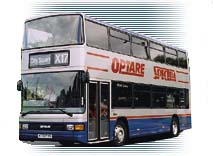
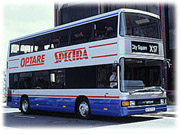
The Optare Spectra was based the MCW Metrobus designs. It was jointly developed by Optare and DAF Bus, with Optare developing the bodywork and DAF the chassis. The DAF chassis, the DB250 used parts from the Metrobus design and the single deck SB220. The Metrobus bodywork was given a new stylish look, which included the removal of the back window. The vehicle was launched in 1991, with Reading Buses taking the first production model, numbered 701 (registration MRD 1). Although you might not have guessed the link between the Spectra and Metrobus by looking at them, it can certainly be heard onboard this bus. In 1997 a low floor version of the Spectra was launched based on a reworked version of the DB250 chassis. Production was discontinued in 2005.
Vecta
The Vecta was designed whilst the Spectra was being developed. It was a medium sized single deck bus, based on the MAN 11.190 chassis.
Sigma
The Sigma was based on the Dennis Lance chassis, a full size single deck bus, and a modified Delta body with front styling from the Vecta. It was launched in 1994.
Prisma
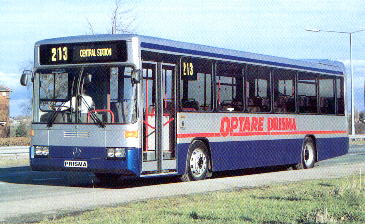
The Prisma had a Delta body with a Mercedes style front, and was based on the Mercedes-Benz 0.405 chassis. It was launched in 1995 after the crisis and break-up of United Bus, of which Optare and DAF were members.
Excel & Excel 2

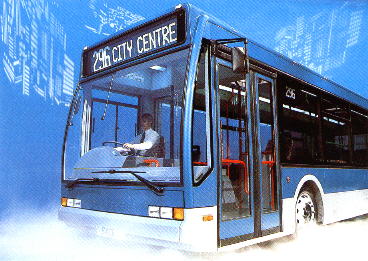
The Excel was launched in 1995 as Optare's first low floor bus. It was a low cost vehicle with midibus components, but in dimensions that made it a full size single decker. The Excel 2 was launched in 1999, it being upgraded mechanically and restyled to give it more of a family look with the Solo. Seating capacities available were 29, 33, 37 and 41.
Autobus Nouvelle 2


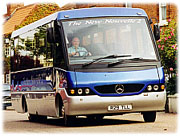
Autobus has been an Optare subsidiary since 1996. The Nouvelle was designed and launched by Autobus just before it was taken over. In 1997 Optare re-launched the Nouvelle as the Nouvelle 2 with restyled windscreen, grille and headlamp areas. The Nouvelle serves the market that StarRider and MetroRider coaches previously catered for. The Nouvelle was also available with some bus fittings.
Solera, Solera 2, Solera SR, Solera Corta & Solera HD
Launched in 1997 the Solera was a 35-seat coach, the model starting Optare's long standing partnership with Spanish company Carroceria Ferqui. It was based on the Mercedes-Benz 11-190 chassis with a high quality, strong, comfortable and economic body, badged as Optare. In 2000 the model was updated using the Mercedes-Benz Atego 1223 chassis and a restyled body, named the Solera 2.
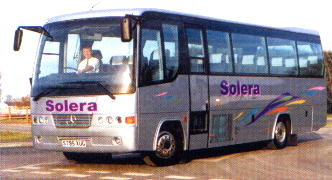
In 2003 the Solera 2 was given another redesign to become the Solera SR with 39 seats, and a shorter 25/27 seat Solera Corta was also introduced. Minor changes were again made in 2005, providing a restyled dashboard, cruise control and powered boot. For Euro 4 the model moved to the Atego 1224 L chassis.
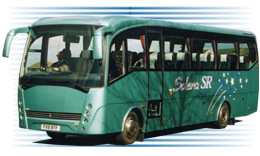
In 2006 the Solera HD was launched, based on the Mercedes-Benz 1324 L chassis with a Euro 4 engine. The model has an increased seating capacity of 42, and was taller to allow additional luggage space.
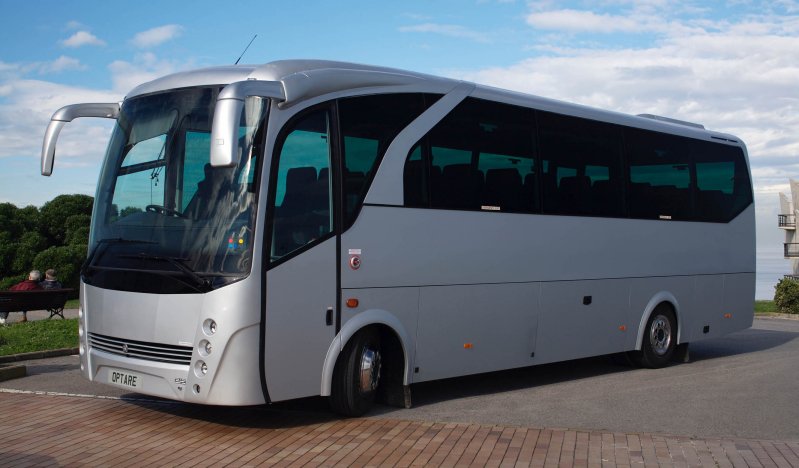
It had been discontinued by 2011.
Solo, Solo Slimline, Solo SR, Solo+ & Solo EV
The Solo was named because it's step is 'so low'. The Solo has become the replacement for the MetroRider and various step entrance Mercedes minibus types, and has a structure very similar to both the MetroRider and Excel with Mercedes engine. It was launched in 1997, and was the only bus to be named as a "Millennium Product" in 1999 by the design council. It was also the first bus to receive Queen's Award for Innovation in 2000. In 2003 a Cummins engined option was made available, then in 2004 new longer and narrower versions were introduced, the narrower version being named the Solo Slimline.
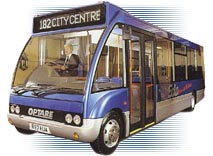
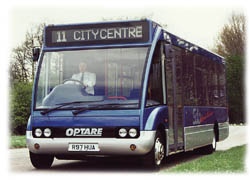
The Solo SR was launched in October 2007 as an updated version of the Solo, positioned as a premium-priced product at the top end of the Solo range. It was also launched with a view to operators looking to replace existing Solos with something that visibly looks different.
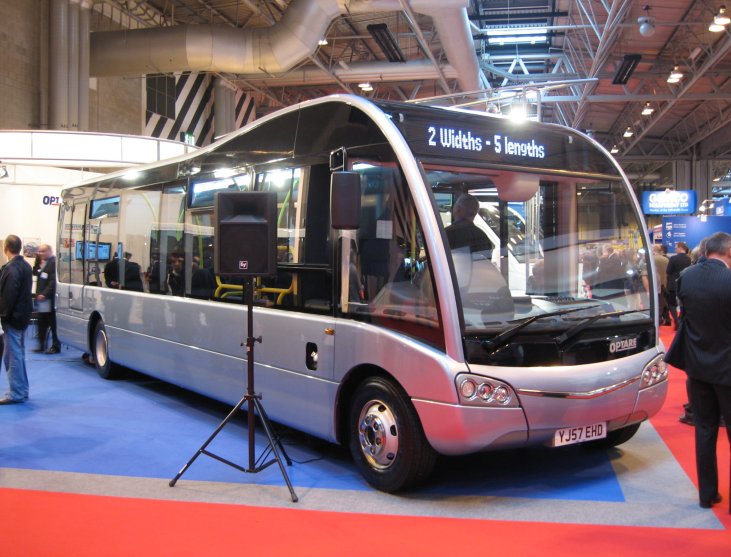
The Solo+ was launched in November 2008, a completely restyled variant to celebrate ten years of the Solo as part of a new model range from the newly combined Optare PLC. However, the new product met with a poor market response and never made it beyond the prototype stage.
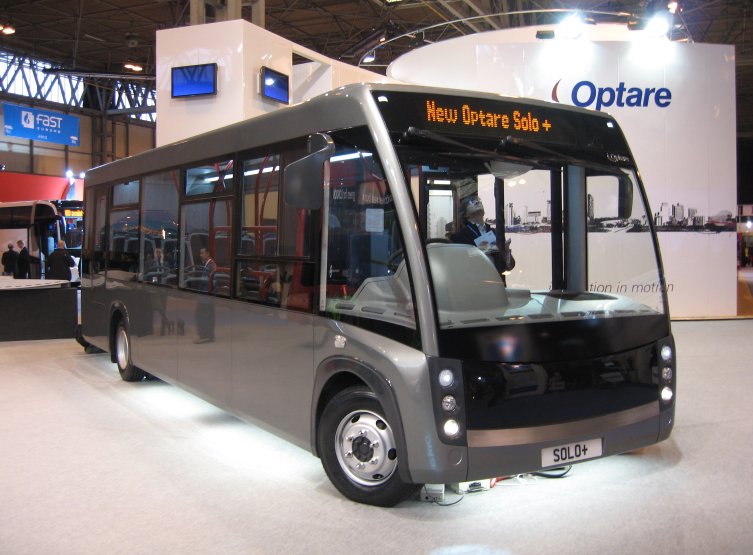
In March 2009 an all electric version of the Solo was launched, called the Solo EV.
The original Optare Solo was dropped from January 2012 in favour of the Solo SR. The 2012 Solo SR range consisted of 7.1m, 7.8m, 8.9m and 9.6m variants, all available in the Slimline (2350mm wide) version. The 8.9m and 9.6m models were also available in the wider 2500mm body width. The opportunity was taken to redesign some of the bodywork components to take advantage of the benefits achieved on the recently released Tempo SR design which reduce both weight and cost and improve fuel economy.
| Reading's Optare Solos | Stagecoach in Warwickshire's Solos |
Soroco & Soroco "Plus"

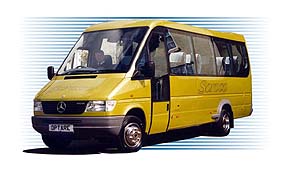
The Optare Soroco was a 16 seat executive Mini-Coach based on the Mercedes Benz CDI Sprinter chassis, but with the roof line lifted for greater interior headroom and optimum passenger comfort. The vehicle has a high quality interior finish in order to serve prestige operators. The longer Soroco "Plus" was later introduced featuring 22 seats.
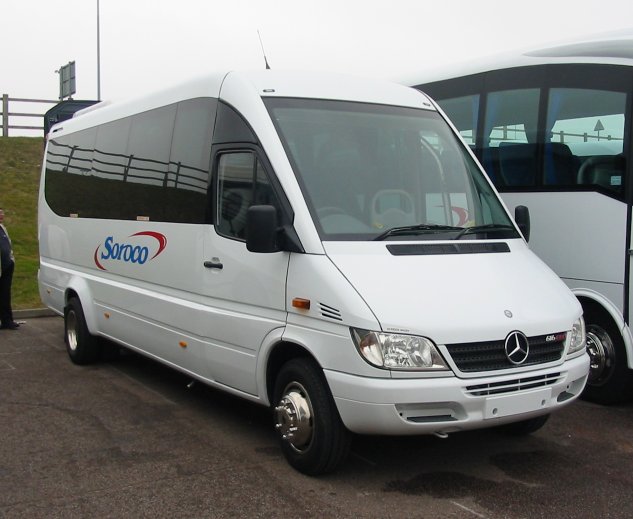
The Soroco was re-launched in November 2006, with models from 2007 being based on a Mercedes Benz 515 CDi chassis cowl and offering 19 seats instead of 16. At the same time the Soroco Plus was discontinued.
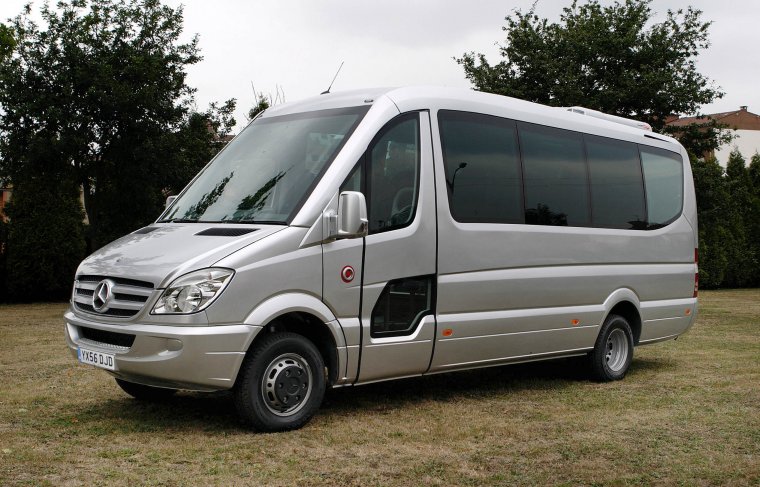
Optare withdrew from the small luxury coach market in January 2012, bringing to an end its long term partnership with Spanish coachbuilder Ferqui who produced this model. Negotiations with a number of parties lead to the model continuing to be available outside the Optare brand through Connaught PSV.
Alero

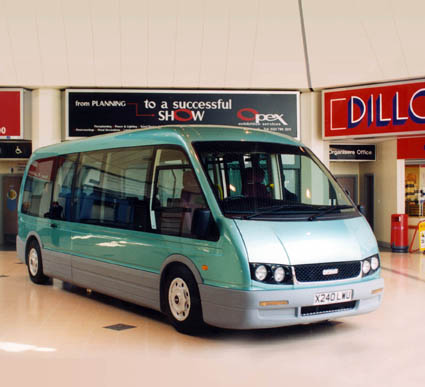
The Alero, launched in 2000 was a 7.2 metre, 16 seat low-floor minibus, built with specialist operators in mind. It was low floor throughout with a wide entrance, so easily accessible on foot or in a wheelchair. The Alero was re-launched in 2006 as the Alero Plus with various changes and component upgrades to overcome reliability and durability issues suffered by the original design. Production of the Alero was discontinued in 2008.
Bonito

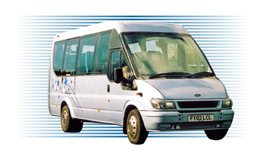
The Bonito was a 16 seat minicoach based on the Ford Transit chassis.
A new accessible Bonito minicoach produced in the Netherlands by Plastisol to Optare’s specification was launched in June 2012. It uses a fully integrated composite body structure with accommodation for up to 16 passengers and no separate chassis, but based on the highly successful Fiat Ducato Maxi light commercial vehicle.
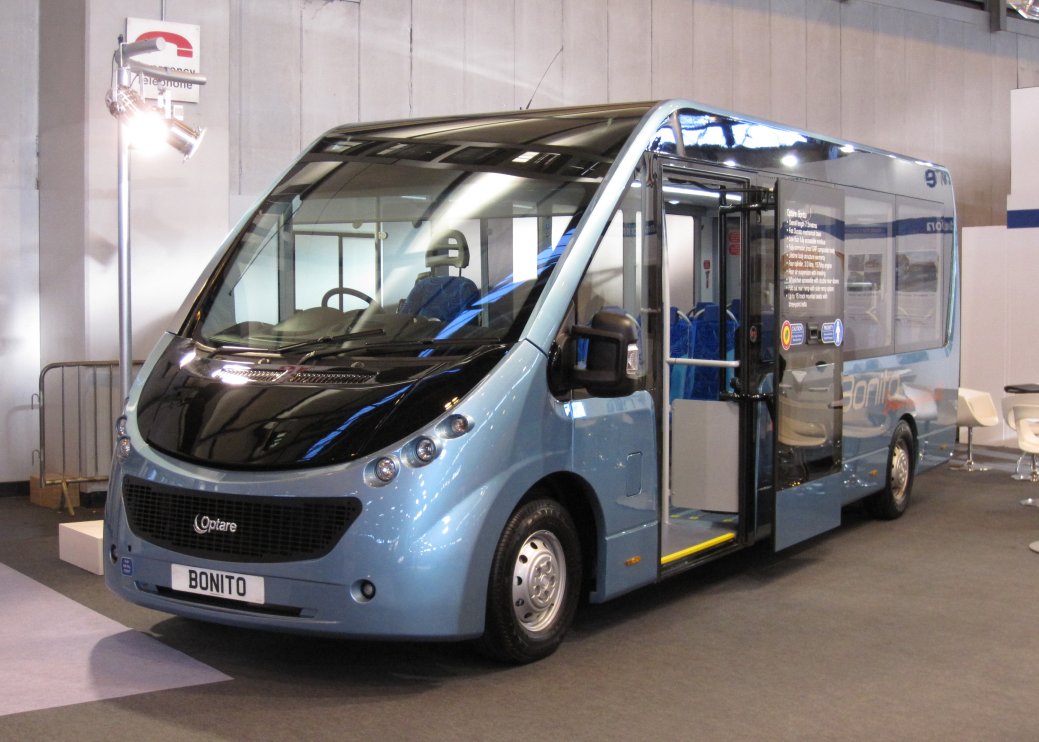
Production ceased in September 2014 following a dispute with manufacturer Plastisol.
Tempo

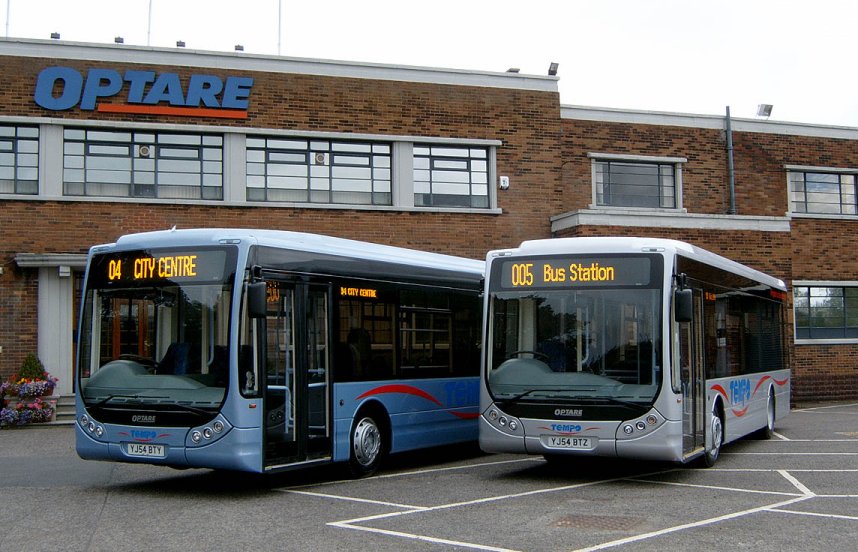
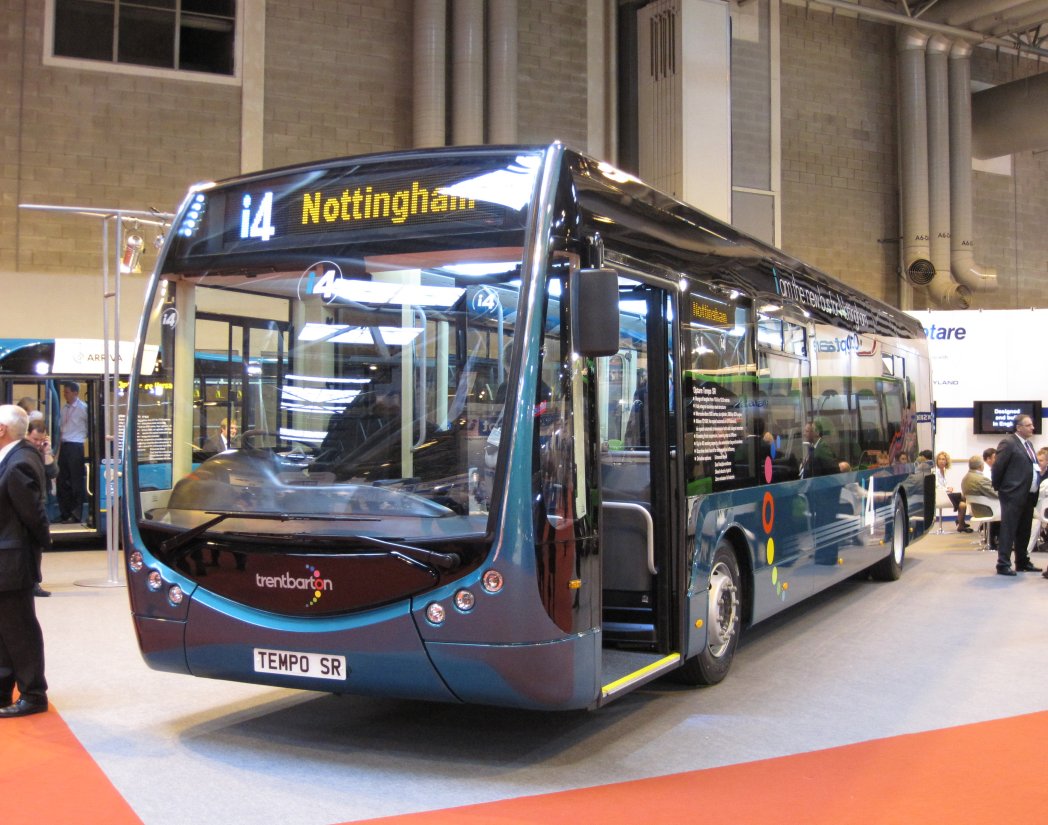
The Tempo was launched in October 2004, and was Optare's second fully integral single decker. It is a light weight but heavy duty bus built with a stainless steel frame clad mainly with aluminium panels. Initially it was available in four lengths, allowing 34, 38, 42 or 46 seats.
The Tempo SR was announced in October 2011 to replace the Tempo from early 2012 in three body lengths of 10.6, 11.3 and 12.0 metres with standard seating capacities ranging from 35 to 43.
Toro

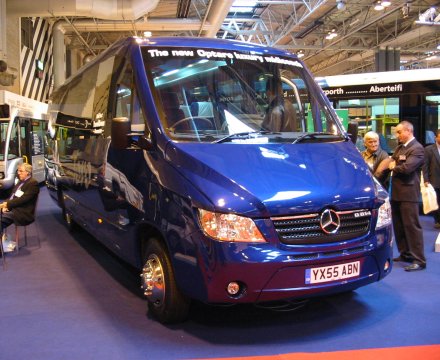
Launched in late October 2005, the Toro was a luxury midi coach based on the Mercedes-Benz 0815D Vario chassis with a capacity of up to 32 seats. From late 2006 the vehicle moved to the Mercedes-Benz Vario 0816D chassis to allow it to meet Euro 4 emissions standards, and by 2011 was a 28 seater.
Optare withdrew from the small luxury coach market in January 2012, bringing to an end its long term partnership with Spanish coachbuilder Ferqui who supplied this model. Negotiations with a number of parties lead to the model continuing to be available outside the Optare brand through Connaught PSV.
Versa
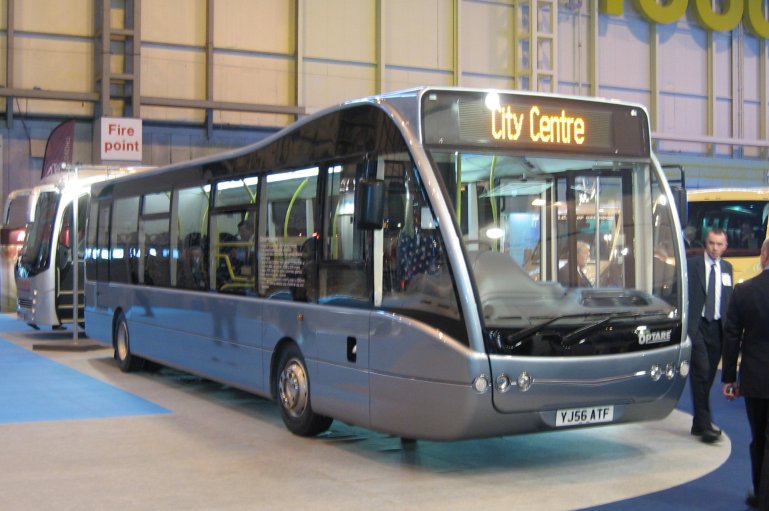
The Versa was launched in November 2006, and was designed as a midibus to fit between the Solo and Tempo, with two lengths of 10.3m or 11m offering seating capacities of either 36 or 40 and a good percentage of seats in the low floor area. The vehicle takes its frame structure from the Solo, but with the front wheels relocated to the more conventional position behind the doors to allow tighter turning circles and better manoeuvrability. A slight restyle in 2011 saw lengths of 9.7, 10.4, 11.1 & 11.7m become available seating up to 44.
Esteem
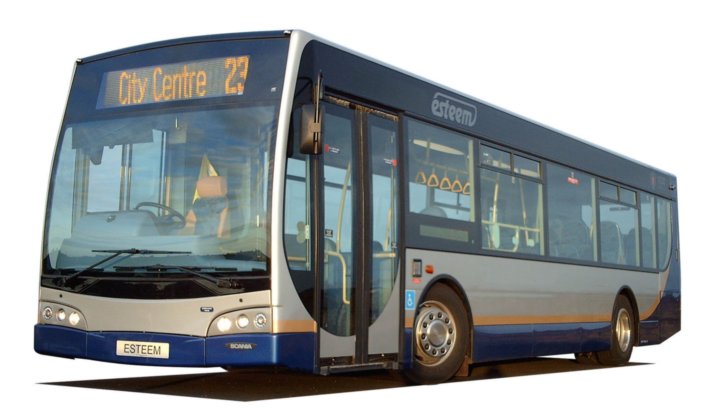
The Esteem body was added to the range as a result of the reverse takeover by Darwen in 2008. The Esteem was launched by East Lancs in 2006 and built on Scania N94UB, Scania N230UB, Volvo B7RLE, MAN 12.240, Dennis Dart SLF and Alexander Dennis Enviro200 Dart chassis. The first few examples of the Esteem only had new front and rear ends, the sides still being of the older East Lancs Myllennium design. The design removed from the product range at the end of 2008, with production ending in 2009. An open top version of the Esteem was also offered, named the Panaire, but none were ever sold.
Olympus
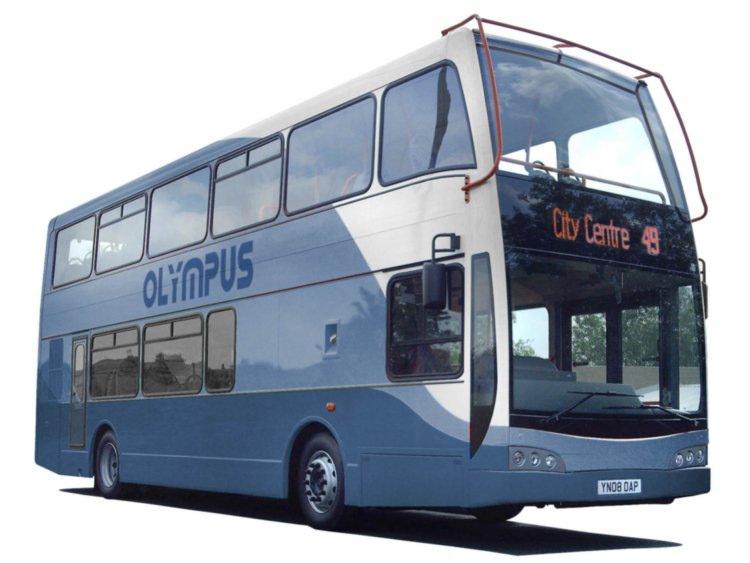
The Olympus body was added to the range as a result of the reverse takeover by Darwen in 2008. The Olympus was launched by East Lancs in November 2006 where it replaced the Scania OmniDekka body on Scania chassis, the Myllennium Vyking on Volvo chassis and the Myllennium Lolyne on Alexander Dennis chassis. During 2009 Optare also announced plans for its own chassis for the Olympus to be launched in 2010. An open top version of the Olympus was also produced, named the Visonaire.
Rapta
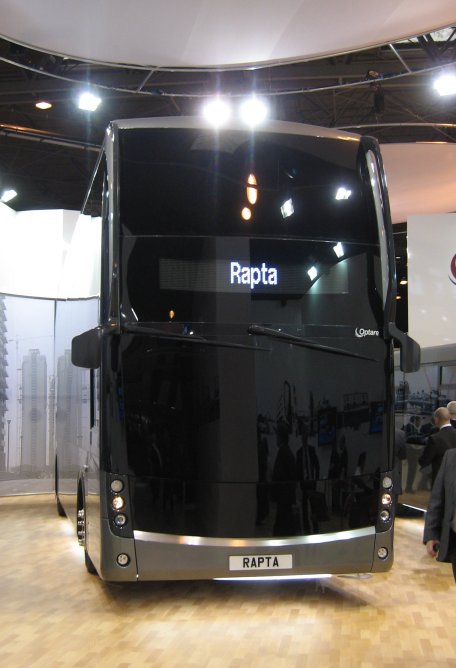
The Rapta was launched in November 2008 as part of a new model range from the newly combined Optare PLC following several years of on/off development by the original Optare side of the business to replace the Spectra. However, in late 2009 it was announced that the Rapta would not enter production, with a new Optare chassis for the Olympus announced instead.
Rapido
The Rapido was announced in May 2009, a 'budget' minicoach based on the Mercedes Sprinter 515 van and build by Ferqui at Oviedo in Asturias in the North West of Spain. The vehicle has 19 seats, and can have seats removed in order to accommodate up to four wheelchairs. It had been discontinued by 2011.
Viedo
The Video was announced in May 2009, based on the Iveco Daily 65C18 chassis and a lower cost version of the Toro body. It has a maximum seating capacity of 28. It had been discontinued by 2011.
MetroCity
In November 2012 a new model aimed at high intensity urban and suburban operations was announced in two lengths of 9.9m and 10.6m. The model derives many of its design and structural features from the Versa and uses the same fully integral stainless-steel structure to achieve low weight.
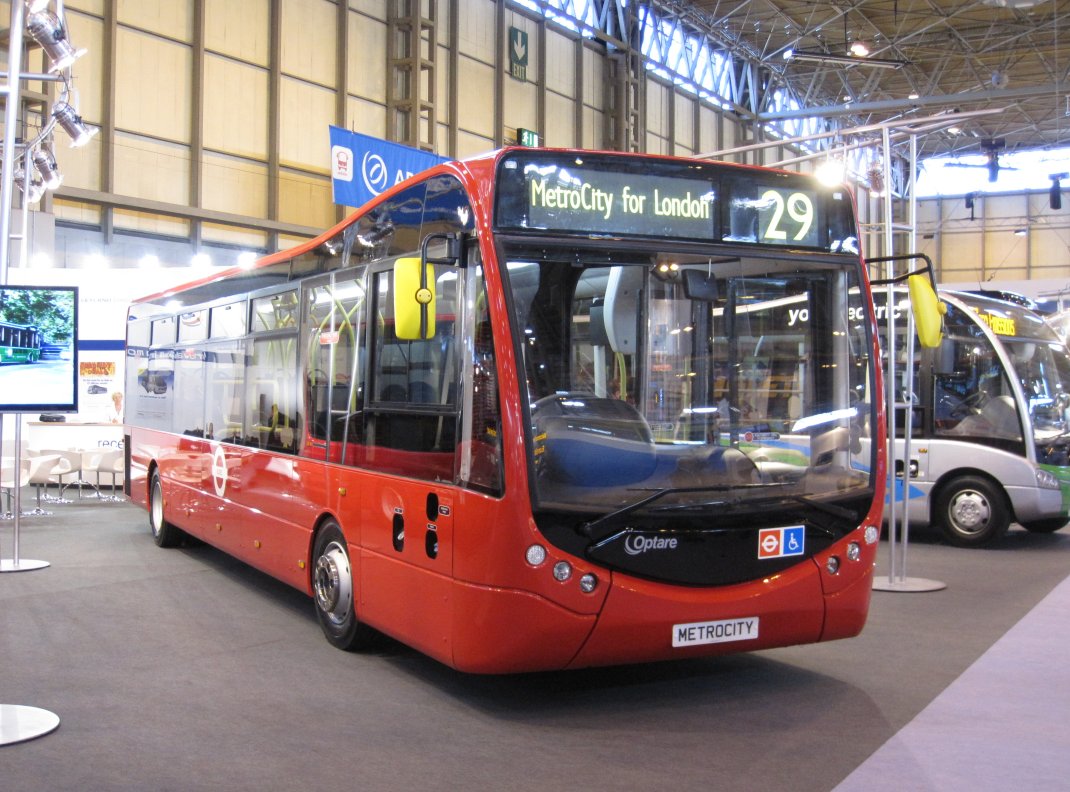
In November 2014 it was confirmed that the MetroCity would become the company's standard single deck product, with the Versa available as a premium product if requested. For Euro 6 the two vehicle lengths were extended to 10.1 and 10.8m.
MetroDecker
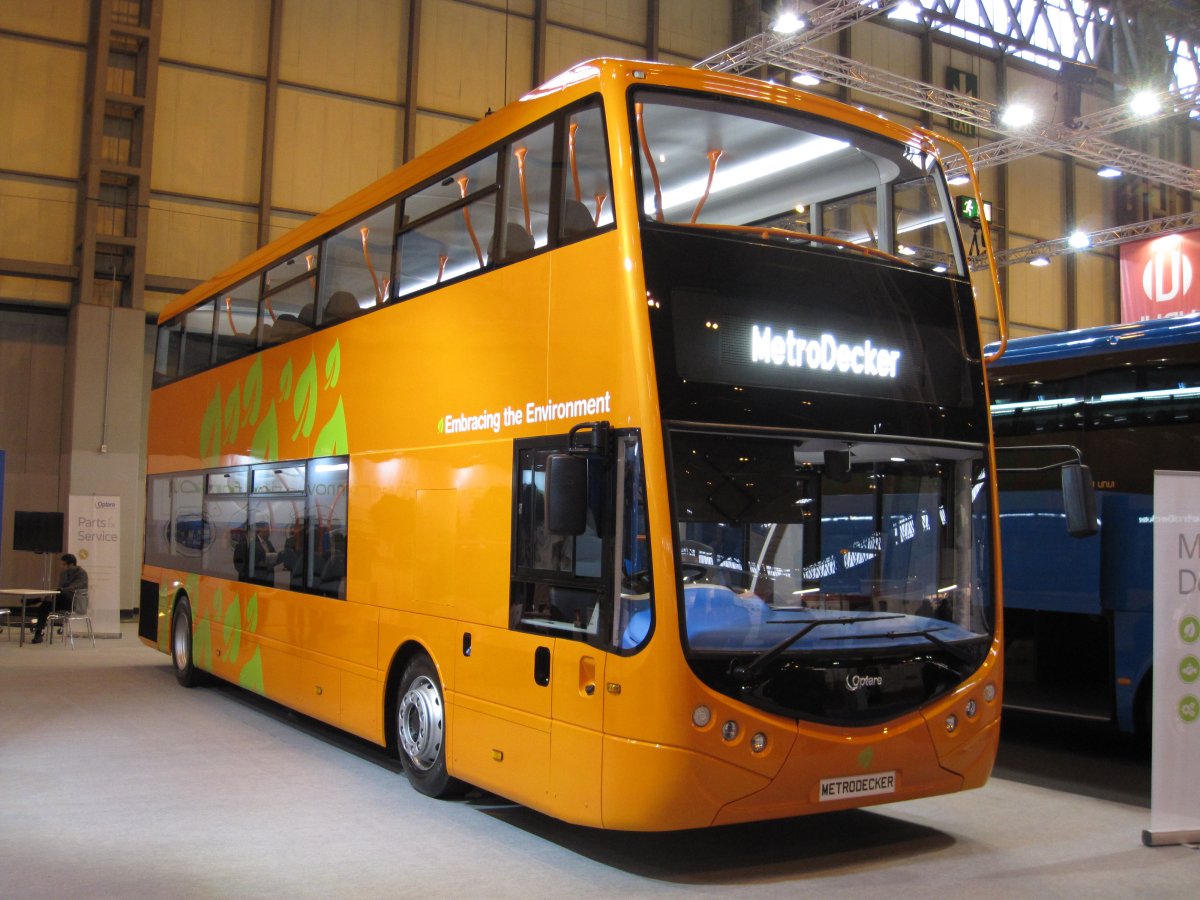
The MetroDecker was launched on 21st May 2014 as a low weight fully integral double decker with Mercedes-Benz engine, and is thought to be the first low floor double decker weighing less than 10 tonnes. Lengths available are 10.5m and 11.1m, and the width is 2.5m to target the Australian market as well as the UK.
Autobus Super Sprinter 16
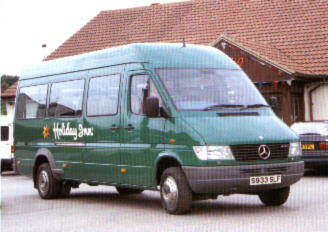
Autobus also made bodies for standard Mercedes-Benz minibus chassis. The Super Sprinter 16 was a 16 seat minicoach based on the Mercedes-Benz Sprinter chassis and designed for shuttle and short haul mini-coach work.
Autobus Vario 24
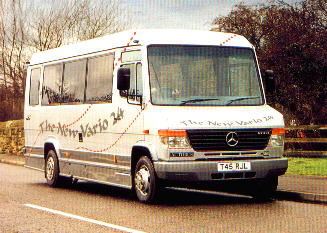
The Vario 24 was a luxury coach conversion on Mercedes-Benz Vario chassis, having 24 coach seats. It was aimed at small coach operators who need a heavy duty workhorse that is comfortable and reliable.
Bova Futura
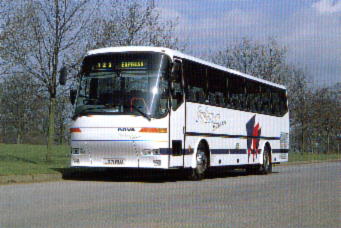
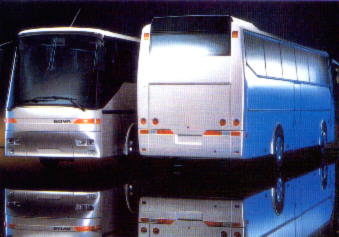
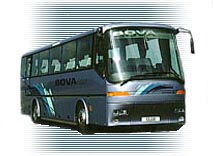
For a time Optare became one of Bova's UK dealers to sell the Bova Futura which had started production in 1983. The Futura series of coaches have a fairly similar exterior, and receive minor redesigns every few years. It was at the start of the Optare arrangement that a Cummins engine option was first added to the Futura. For a long time the Futura was the only Bova vehicle available in the UK, but during the mid 2000s this changed as the Magiq also came onto the market.
Other large Optare buyers in the past have included Wilts & Dorset and TrentBarton.
Last Updated: 23-11-14
- | Company History | Centenary | Reading Mainline | AEC | Optare | Depots | Service 17 | Service 21 | Route Allocations |
- | Bus Fares | ColourBuses | MegaPanels | MegaRears | RTL Changing | Fun RTL Stuff |
- Reading Area Operators